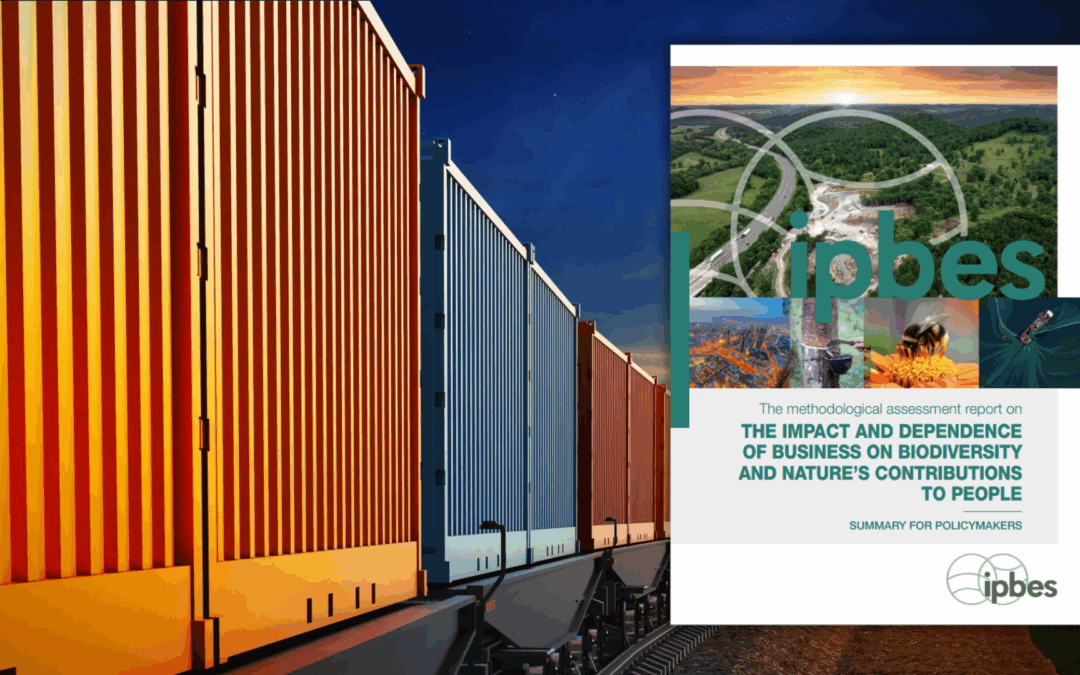

A new IPBES report highlights the private sector’s dependence on and impact on nature and biodiversity. Ahead of its launch, scheduled for 2025, the draft report has been made available for external review by all interested parties.
Through September 17, 2024, policymakers, researchers, experts, and other relevant stakeholders have the opportunity to influence the work on IPBES’s upcoming consensus report, *Business and Biodiversity Assessment*, which is currently available online for external review.
The upcoming report, officially titled *Methodological Assessment of the Impact and Dependence of Business on Biodiversity and Nature’s Contributions to People*, aims to enhance our understanding of businesses’ relationship with nature by examining approaches and methods for assessing how businesses and financial institutions—and their operations—depend on—and impact—global biodiversity and ecosystem services.
Among other things, the report will identify criteria, indicators, and guidelines for businesses and decision-makers aimed at reducing the impact on nature and biodiversity, in support of efforts toward transformative change. The report is scheduled to be presented to the governments of IPBES’s 147 member countries and published in the second half of 2025.
If you would like to sign up to review the draft report, you must register as a user on the official IPBES website, where you will also find information about the opportunity to participate in two scheduled dialogue meetings on August 27 and 29 August, both of which will take place online.
Follow the link and instructions here: https://www.ipbes.net/business-impact/fod/notification
Greater Focus on Biodiversity and the Role of the Private Sector
The private sector’s role in the biodiversity crisis has received significant attention in recent years—including through the adoption of the 2030 targets in the 2022 Kunming-Montreal Agreement and through the new EU directive, the CSRD (Corporate Sustainability Reporting Directive), which sets requirements for companies’ sustainability reporting, including their impact on and dependence on nature and ecosystem services.
This new landscape—which Danish companies must also navigate—was the focus this fall during a theme day on the role of SMEs, organized in collaboration between IPBES in Denmark, CLEAN, DTU, and CBS, featuring presentations and knowledge-sharing from both companies and researchers, including Professor Katherine Richardson from the Globe Institute at the University of Copenhagen and Associate Professor Morten Knudsen from the Department of Organization at CBS.
Read more about last year’s theme day and find the presentations from the event here: The biodiversity crisis also affects businesses