
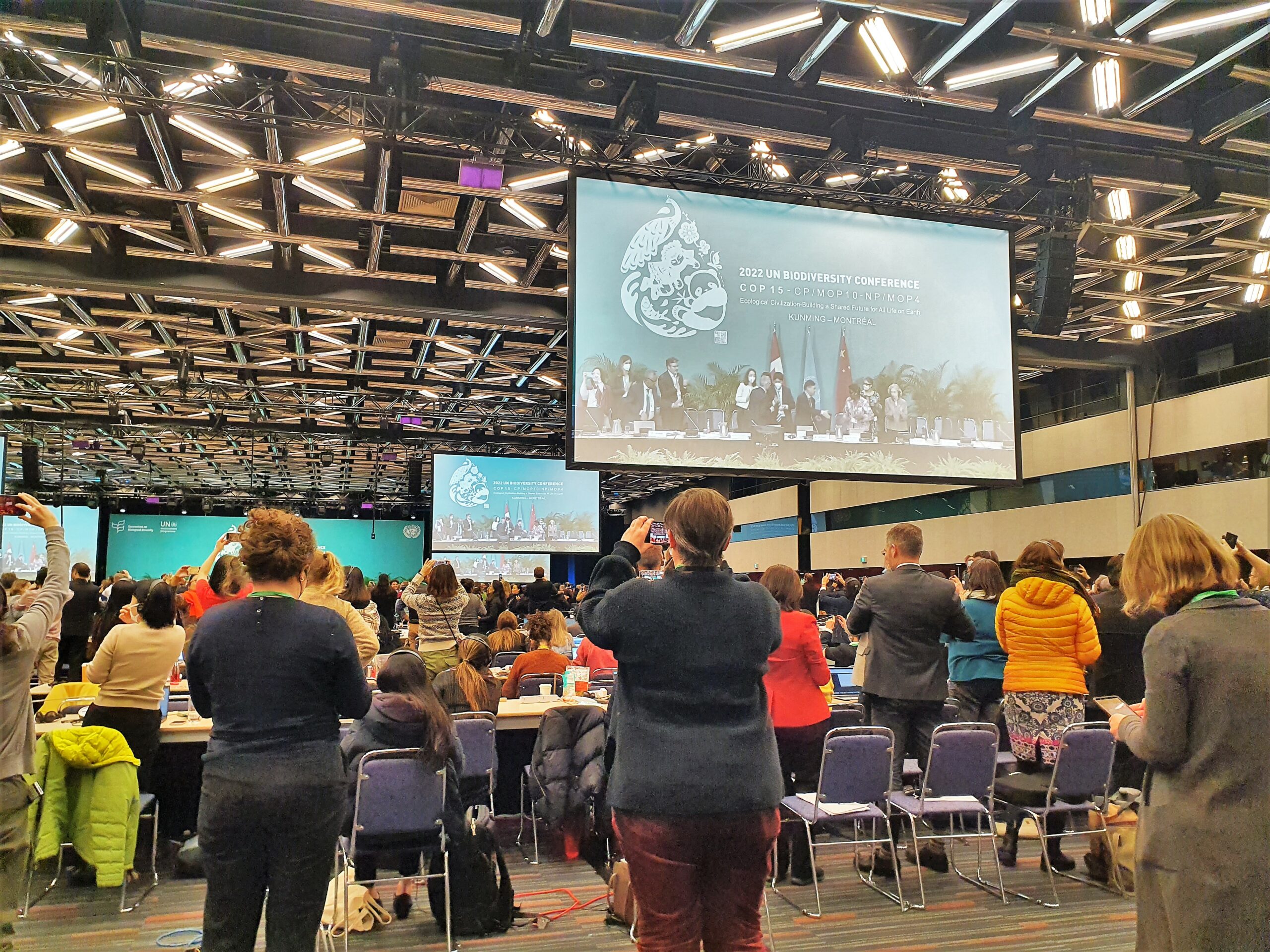
COP15 of the Convention on Biological Diversity is a crucial summit on biodiversity, now that it has become clear that the previous goals to halt the loss of biodiversity—the so-called Aichi Targets—were not achieved. In other words, at COP15 in Montreal, Canada, we are facing decades of unmet global goals to halt the decline and loss of the Earth’s biodiversity. COP15 culminated in 23 targets to be achieved by 2030 as part of the so-called Global Biodiversity Framework.
One of the goals that has received the most attention is Goal 3, which aims to ensure that 30% of the world’s land and marine areas are effectively protected and managed by 2030, while also serving as representative and functionally connected protected areas. This goal addresses the primary cause of biodiversity loss as identified in the IPBES reports: our intensive land use—and the resulting lack of space. This target, incidentally, seems a long way from our current starting point here in Denmark, where just 2.3% of the Danish land area (an additional 5.3% requires a specific assessment) and 12% of the ocean is protected natural areas, according to the analyses in the Biodiversity Council’s first report, published in late November 2022.
Goal 7 on reducing pollution calls for at least a 50 percent reduction in nutrient emissions and in the risks associated with pesticide use, as well as efforts to eliminate plastic pollution. Similarly, regarding the goal of allocating 30% of land area to biodiversity conservation, the EU has already adopted a target to halve pesticide use under the EU Biodiversity Strategy. Implementation has been lacking in some countries, which is why the Commission proposed a regulation this summer.
The two post-2020 Goals 2 and 8 focus on restoration, including that of carbon-rich natural areas that conserve and/or sequester carbon and promote biodiversity. A specific target is that 30% of degraded terrestrial and marine ecosystems will be subject to effective restoration. This will help improve vital ecosystem functions and services such as soil fertility, nature’s ability to purify water, and ensure air quality—functions that are also essential to our own existence.
At the same time, such nature-based solutions must contribute at least 10 Gt of CO2 equivalents per year. The definition of nature-based solutions is broad and was most recently established in Nairobi by the UN Environment Assembly. It is therefore crucial for biodiversity that this definition be interpreted in a way that ensures these solutions also contribute effectively to addressing the biodiversity crisis, rather than merely serving as cosmetic measures.
Government-sponsored destruction of biodiversity
A four-digit billion amount in USD is currently being spent to support activities that harm biodiversity around the world. A critical article in The Guardian stated just before COP15 that sectors with the greatest negative impact on biodiversity are estimated to receive 500 billion per year (agriculture, 2021), with the majority provided without any consideration for biodiversity; fossil fuels such as oil and gas receive 695 billion USD, of which 531 billion (2021) for price regulation and 35 billion USD (2018) for fisheries—the majority of which goes to large-scale industrial fishing.
Strong words were spoken by both Inger Andersen of Denmark, Executive Secretary of UNEP, and Jo Tyndall, Director at the OECD (Organization for Economic Cooperation and Development), regarding the enormous subsidies that are harmful to biodiversity, with a clear message about the need to transform these into subsidies that promote biodiversity.
It is Goal 18 of the post-2020 goals that embodies this very dilemma. The text was up for debate, and the square brackets were piling up. The goal was set to identify harmful subsidy schemes by 2025, with the aim of reducing them by at least $500 billion per year by 2030, phasing out the most harmful subsidy schemes first. It will be interesting to see what impact this will have on, for example, the EU’s agricultural subsidies.
Biodiversity, Financial Institutions, and the Private Sector
COP15 was the biodiversity conference where private companies and financial institutions truly stepped up, with participation and contributions from finance ministries. Leading players in the private sector and financial institutions have begun to take action and assume shared responsibility for the biodiversity crisis, in part because they see a business advantage in doing so, and because there is a growing realization that biodiversity is a foundation for economic development.
In terms of content, the focus is on implementing an economic transition, including enabling companies and financial institutions to both track and monitor, assess, and disclose information regarding their dependence on and impact on biodiversity throughout their supply and value chains. The new buzzword is “Nature Positive,” which is comparable to “Net Zero” in the climate context. Post-2020 Goal 15 in the final agreement applies primarily to large and international companies.
It is unclear just how binding the requirement actually is for these companies to document their dependence on and impact on biodiversity and to publish such reports. However, governments around the world must establish the framework to ensure that this happens to an increasing extent as an important step in the right direction.

Photo: Lars Dinesen.
Resource Mobilization
At the conference, one of the major questions—as at the climate summit that had just taken place—was how much money needs to be mobilized, primarily from North to South. A draft of Goal 19 states that at least $200 billion per year must be mobilized by 2030 for efforts through identified activities in national strategies and plans (NBSAPs in CBD terminology), and that an additional amount of at least USD 20 billion per year must be mobilized by 2025 and at least USD 30 billion annually by 2030.
At the same time, Goal 19 calls for the mobilization of resources through innovative solutions—such as payments for ecosystem services, etc.— the involvement of the private and financial sectors, and at the same time, it presents an opportunity for the establishment of biodiversity funds; furthermore, mechanisms such as the Global Environment Facility (GEF)—which has been used to support a number of initiatives in many countries—will also come into play.
The Importance of the Convention on Biological Diversity
Just as when the 20 Aichi Targets were adopted in Japan in 2010, there was a sense of euphoria in the hall when the targets were adopted after long and arduous negotiations. Unfortunately, not a single one of the Aichi Targets was fully achieved. This time, great effort has been made to establish indicators and monitoring mechanisms, including national biodiversity reports—the so-called “national biodiversity strategies and action plans”—for the Convention. These national reports will be presented at each subsequent COP through 2030 and will include a global review in two phases leading up to 2030.
While the EU has a court, the UN and the Convention on Biological Diversity have only the media and public shaming. Goals are certainly better than no goals at all, but goals in and of themselves are far from enough. In other words, we’ll see in 2030 whether the third time’s the charm, and whether, in eight years, we’ll be able to celebrate that we actually managed to achieve them.
Contact
For more information, please contact the IPBES Denmark coordinator Lars Dinesen