In the future, there is good reason to expect more proposals for nature-based solutions—an international call for research project proposals saw record-high Danish participation.
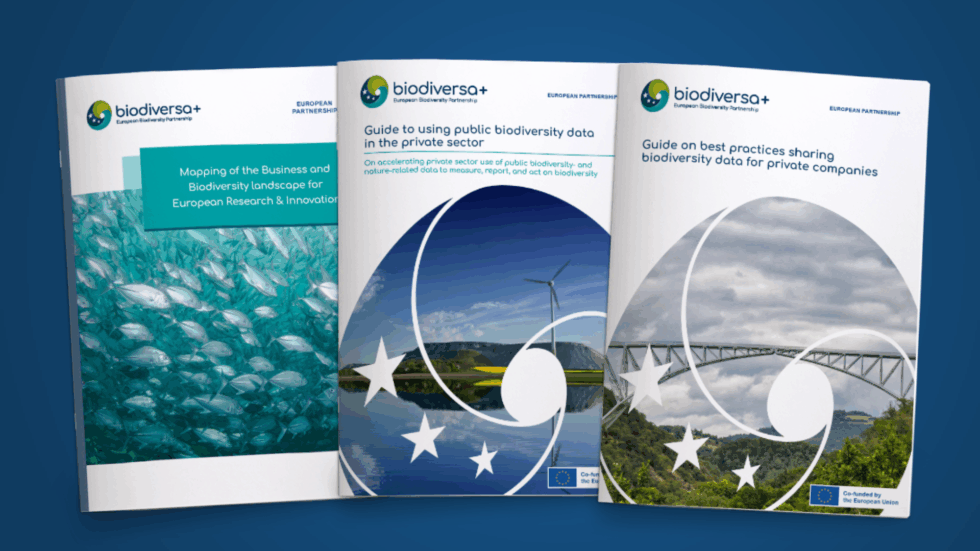
The European partnership Biodiversa+, with 83 partners from 41 countries, annually funds international biodiversity projects designed to help find solutions to the biodiversity crisis. Just recently, another call for proposals concluded, focusing on nature-based solutions, with a record number of Danish projects among the 34 winning projects.
Of the 183 international applications, 25 percent included Danish participants, and one-third of the projects that were ultimately recommended for funding had Danish representation. This is an unprecedentedly high success rate, which, in addition to the quality of the project proposals, was also due to the Innovation Fund doubling the Danish grant allocation for this application round.
Nature-based solutions are particularly relevant right now, given that 130 countries have gathered for negotiations in Windhoek, Namibia, to adopt two landmark global reports from IPBES—one on how to bring about transformative change to halt biodiversity loss, and the other on how to balance critical considerations regarding our needs for food, health, and water supply.
Here, the 34 new innovative research projects on nature-based solutions can make important contributions to the more concrete, research-based implementation of the findings of the upcoming IPBES reports.
The research projects on nature-based solutions will run for three years and will explore the potential to address the biodiversity crisis and other environmental and social challenges, and thus have the potential to help demonstrate transformative change.
34 projects on nature-based solutions
As mentioned, the projects—which are funded by the Innovation Fund and co-funded by the European Commission—focus on three critical themes:
- Synergies and Trade-offs: A Study of the Benefits and Costs of Nature-Based Solutions Related to Human Health.
- Biodiversity Loss: A Study of How Nature-Based Solutions Can Address the Human Causes of Biodiversity Loss.
- Transformative Change: An Examination of the Role of Nature-Based Solutions in Promoting Equity and Other Societal Changes.
The selected projects must demonstrate a high level of professional expertise and address global challenges—that is, the project results must be scalable. Furthermore, they must reflect interdisciplinary collaboration involving a wide range of stakeholders.
The Danish Projects
The Danish participants in the selected projects have collectively been awarded grants totaling 27.5 million DKK. The projects are the result of a careful evaluation and selection process conducted by an independent committee, which led to the selection of 34 projects—including no fewer than 11 with Danish partners.
Danish participation is based at a number of Danish universities, as well as at several other research institutions and private partners.
In Denmark, the Innovation Fund is responsible for nominating Danish projects for Biodiversa’s call for proposals:
It is impressive that there was such a high level of Danish participation and that the quality was so high. This resulted in grants totaling 27.5 million kroner for Danish partners’ participation in biodiversity projects focused on nature-based solutions.
– Aila Lonka, Head of International Collaborations at the Innovation Fund.
Investments in the millions
IPBES in Denmark played a crucial role in bringing Denmark on board with the European research collaboration in 2019, and Lars Dinesen, the coordinator of the Danish IPBES Secretariat, has since represented the Innovation Fund and the Ministry of the Environment in this collaboration through targeted efforts to engage Danish research institutions and other stakeholders, while also seeking to promote European research collaboration and the impact of its findings:
It will be interesting to see the results of all these research projects from the European partnership and to see how the findings can be applied in practice—including, for example, in the work to implement the Nature Restoration Act. And, of course, I’m delighted that the Innovation Fund is supporting the many top-ranked projects in which Danish stakeholders are involved.
– Lars Dinesen, IPBES Coordinator in Denmark
The nature-based solutions projects will begin between December 2024 and March 2025, and all will be launched at a kick-off meeting in Montpellier, France, on April 9, 2025, with the option to participate in person or online. Collectively, the 34 nature-based solutions projects represent an investment of more than €40 million, including co-financing from the European Commission.
This is the third call for research proposals under the Biodiversa+ program. The two previous calls included research projects addressing both the protection and monitoring of biodiversity. Biodiversa+ will reopen for applications in November 2025, focusing on the topic “Restoration of ecosystem function, integrity, and connectivity” (BiodivFunc).
Read more about the next application round at Biodiversa+ and get an overview of important dates here:
See the complete overview of the projects here:
BiodivNBS: €40 million investment in 34 innovative research projects