When the 11th IPBES Plenary Session concluded in December 2024, it marked significant progress for global biodiversity, ecosystems, and sustainability, with the approval of two new and landmark reports, both of which are predicted to have a major impact on the future green transition. Both reports will serve as the basis for a new symposium on February 19, 2025, in collaboration with Copenhagen Business School.
Closer to Transformative Change
The release of the latest global consensus reports from IPBES serves as the basis for a new symposium on February 19, 2025, in Copenhagen, in collaboration with Copenhagen Business School (CBS).
Here, we explore how we in Denmark can bring about transformative change that addresses the underlying causes of the biodiversity crisis across sectors. Researchers from various disciplines will present their perspectives on transformative change, and through case studies, we will explore the barriers, challenges, opportunities, and visions for far-reaching systemic change.
Among the symposium’s keynote speakers and presenters, we are pleased to welcome Professor Esther Turnhout of the University of Twente in the Netherlands, co-author of the IPBES report on transformative change. In addition, Professor Katharine Richardson, Professor Carsten Rahbek—who is the center director and chair of IPBES’s steering committee in Denmark—and Peter Møllgaard, chair of the Climate Council, are among the symposium’s presenters.
Participation is free, but registration is required. Learn more about the symposium and register here by February 16, 2025: Symposium – Closer to Transformative Change in Denmark
First plenary session on the African continent
Windhoek, Namibia, served as the venue for the most recent IPBES plenary session, IPBES 11, marking the first IPBES plenary held in Africa and underscoring the continent’s growing role in global science-policy efforts. Two key reports were the subject of intensive discussion during the plenary’s numerous sessions: the report on transformative change and the Nexus report on the interrelationships between biodiversity, food production, health, water supply, and climate.
The Danish delegation consisted of Katrine Nissen and Michael Greel from the Ministry for Green Tripartite Cooperation, as well as Lars Dinesen, Denmark’s IPBES coordinator.
Report on Transformative Change
Thematic Assessment of the Underlying Causes of Biodiversity Loss, Determinants of Transformative Change, and Options for Achieving the 2050 Vision for Biodiversity
The new report examines the underlying causes of biodiversity loss and outlines the actions needed to achieve the UN’s 2050 vision for biodiversity. The report has been long awaited, as it addresses, among other things, the necessary changes identified in the 2019 Global Consensus Report on Biodiversity and Ecosystem Services.
IPBES defines transformative change as:
A fundamental, system-wide reorganization encompassing technological, economic, and social factors, including paradigms, goals, and values.
IPBES (2019)
The report emphasizes the need for these far-reaching and systemic changes, while also identifying barriers and opportunities that are key drivers of the biodiversity crisis: land use, human activity, pollution, invasive species, and climate change.
The report is based, among other things, on the Values report *The Assessment Report on the Diverse Values and Valuation of Nature* (IPBES, 2022), which outlines the significant shifts in our behavior and in the ways we perceive and conceptualize values as key components of transformative change.
Read more: Two new consensus reports adopted
Finally, the report offers strategic guidance to decision-makers and stakeholders and highlights the key principles:
- Equality and Justice
- Pluralism and Inclusion
- Respect for nature and its values
- Adaptive Learning and Action
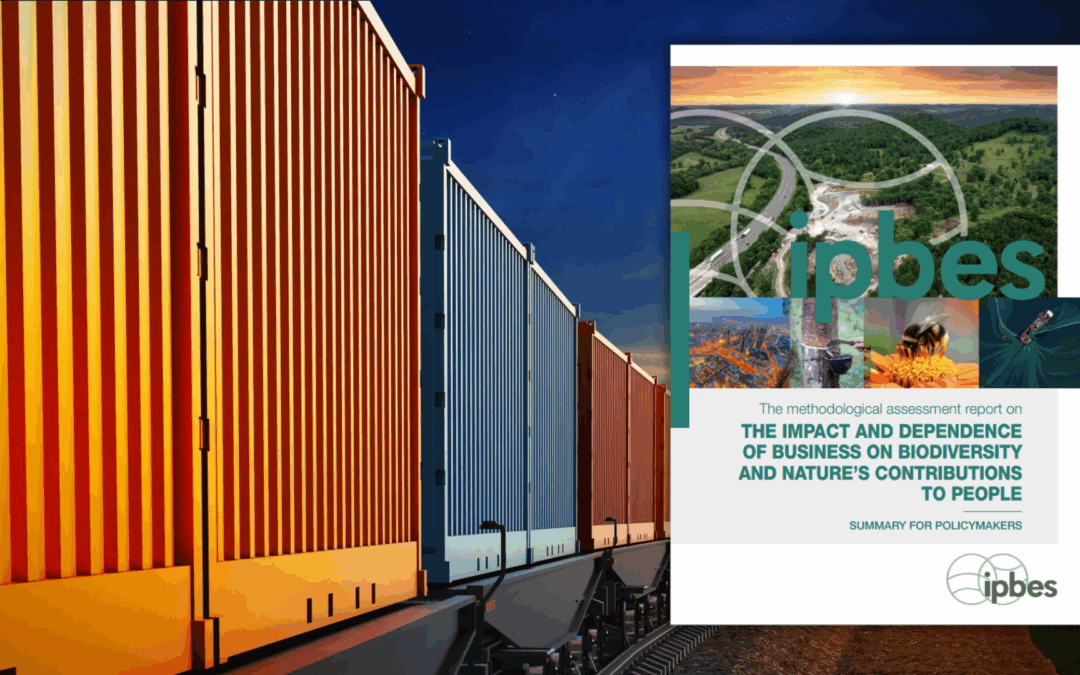
The report on transformative change also provides a solid foundation for the upcoming IPBES report on business and biodiversity, which is scheduled to be released in December 2025.

The Nexus Report
Thematic Assessment of the Interlinkages Among Biodiversity, Water, Food, and Health
This report examines the interrelationships and trade-offs between biodiversity, water supply, food, health, and climate, and presents various scenarios with different priorities and “trade-offs”; that is, if one area is optimized at the expense of others, it is done so at the expense of other areas.
For example, if we have intensive agriculture, it comes at the expense of biodiversity and, as a rule, also climate regulation and perhaps water quality as well. In the report, the authors advocate for a holistic approach to addressing the interdependencies among these issues. They do so by presenting scenarios and potential responses aimed at achieving balances that seek to accommodate the various considerations simultaneously. The report complements the report on transformative change by focusing on the balances—including synergies and “trade-offs”—between the various areas.
The report concludes that if current negative trends continue, this will result in significantly negative outcomes for all so-called “nexus elements.”
The main focus is on increasing understanding of the links between biodiversity, water supply, food, health, and climate, as well as the individual and cross-cutting links: What are the consequences of increased agricultural production, for example, for biodiversity, the supply of clean drinking water, etc.?
The report is organized into four sections:
- Past and present interactions between biodiversity, water supply, food, health, and climate
- Future Interactions
- Response options that address the interactions
- Regulating Interactions for a More Equitable and Sustainable Future
The report places particular emphasis on “response options,” including collaboration across sectors and scales (time and space) with the aim of contributing to a holistic synergy in administration and governance, where many considerations are addressed simultaneously.
Future Directions and Collaborations
The plenary also discussed the framework for a new global IPBES report to be published in 2028. This comprehensive report will cover terrestrial, freshwater, and marine ecosystems, with a focus on historical data and future projections through the year 2100. In addition, emphasis was placed on seeking to strengthen knowledge collaboration between IPBES and the Intergovernmental Panel on Climate Change (IPCC) in areas where there are overlapping challenges and opportunities for action.
The next IPBES plenary is scheduled to take place in London in late 2025. This plenary session will focus on the relationship between the business sector and biodiversity with the aim of presenting knowledge on how to facilitate the business sector’s engagement in addressing the biodiversity crisis.
Capacity Building and National “Uptake”
A significant portion of the discussions focused on improving the incorporation of knowledge into IPBES reports and strengthening capacity-building at the national level.
The outcomes of the 11th IPBES Plenary underscore the critical need for transformative change and new integrated approaches to address the complex challenges facing global biodiversity. The courses of action outlined in the two reports will be crucial in guiding policy-making processes and actions toward a sustainable future.
Through the link, you can read more about the reports on the IPBES international website and find the Summary for Policymakers for each report: